Naval Ravikant and Rational Buddhism
Happiness, wealth, and wisdom: Naval's ideas that changed how I see the world.
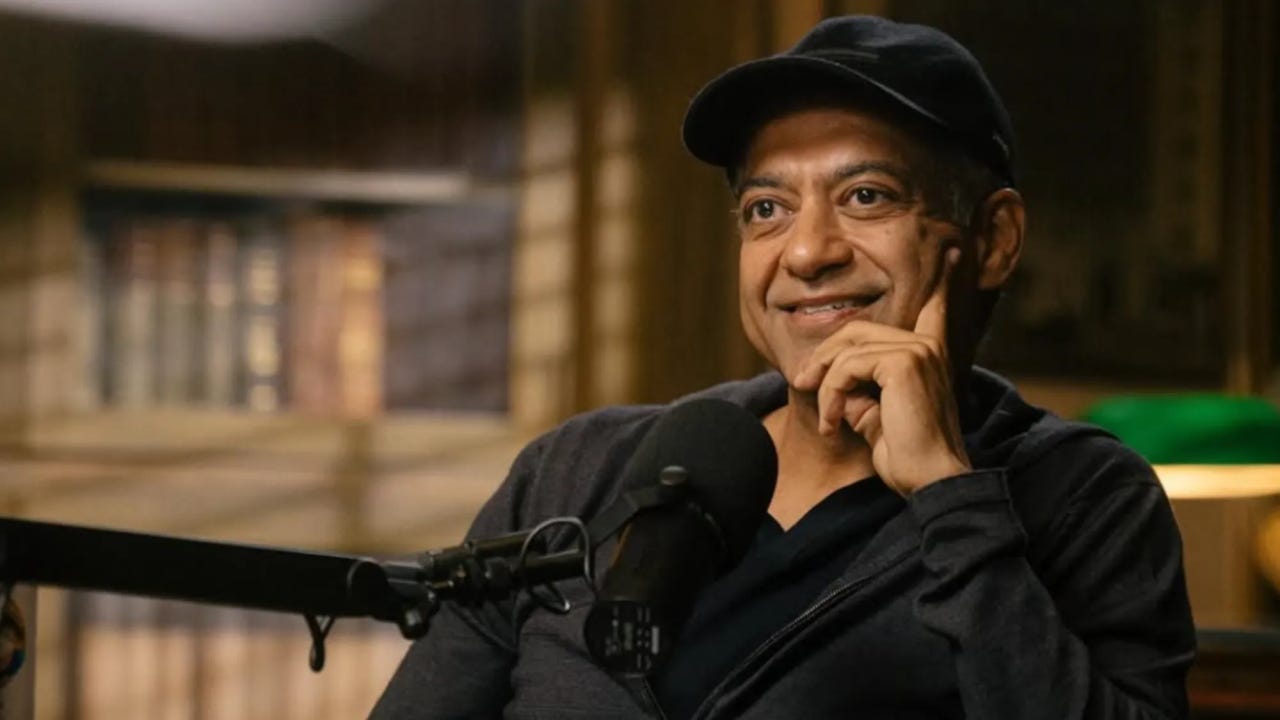
A calm mind, a fit body, and a house full of love. These things cannot be bought. They must be earned.
Naval Ravikant is one of the people who has influenced my life the most.
He is an entrepreneur, the founder of AngelList, and an early investor in Twitter, Uber, Notion, and a hundred other companies that changed the world. His achievements are incredible. But what I like most about him is the way he understands life, happiness, calm, and business.
In The Almanack of Naval Ravikant, Eric Jorgenson gathers the Twitter threads, podcasts, and interviews where Naval has shared his ideas.
You can download the book for free at navalmanack.com.
These are the ideas from Naval that have marked me the most, with my own commentary.
ON LIFE
The Goal Of Life
Your goal in life is to find the people, the business project, or the art that needs you the most. Then give it your whole self.
For that, you will need all the time you have available outside the work you do for survival. One feeds you today. The other feeds you tomorrow.
There are basically three major decisions you have to make in your life:
- Where you live.
- Who you are with.
- What you do.
If you think about it, almost your entire life comes down to those decisions. Simple, but difficult.
Do not take yourself so seriously. You are just a monkey with a plan.
The Meaning Of Life
What is the meaning and purpose of life? Naval gives us three possible answers.
- It is personal — you have to find your own meaning. The important thing is not the answer, but the question.
- There is no meaning — it is like writing on water or building sand castles. You have to create your own meaning.
- Entropy — locally, we reverse entropy, but globally, we accelerate it toward the heat death of the universe.
For me, as a Catholic, the meaning of life is love. As we read in Luke 10:27:
Love the Lord your God with all your heart, with all your soul, with all your strength, and with all your mind; and love your neighbor as yourself.
Naval presents his ideas as a form of “rational Buddhism.”
It understands the inner work advocated by Buddhism: becoming happier, feeling better, being more present, and controlling your emotions. In short, becoming a better human being.
- Try everything, test it for yourself, but be skeptical.
- Keep what is useful and discard what is not.
- Everyone starts out innocent. Everyone becomes corrupted.
- Wisdom consists in discarding vices and returning to virtue through knowledge.
Wisdom is understanding the long-term consequences of your actions.
ON HAPPINESS
If finding the meaning of life is the first step, the second is learning how to enjoy it. Naval devotes much of his thinking to something most people chase without understanding: happiness.
Naval And Happiness
For Naval, happiness is actually a natural state. Happiness appears when you remove the feeling that something is missing from your life.
- We see ourselves as fixed and the world as malleable. In reality, we are the malleable ones, and the world is, to a large extent, fixed. This connects with the Stoic practice of distinguishing what we can change from what we cannot.
- A rational person can find peace by cultivating indifference toward things outside their control.
- Happiness, love, and passion are not things you find, but choices you make and skills you develop.
At any given moment, only a very small percentage of your brain is focused on the present. The rest is planning the future or regretting the past. This keeps you from seeing the beauty in everything and being grateful for where you are.
Sometimes it is as simple as stopping for one second, for example during a family meal, to realize how lucky you are and that all of this is a gift you are enjoying.
All of man’s problems arise because he cannot sit quietly alone in a room. That is where meditation comes in: a training of attention. The ability to be present, nothing more. Watching your thoughts pass by, as if they were clouds in the sky.
Enlightenment is the space between your thoughts.
Much of our unhappiness comes from comparing the past with the present.
Happiness has more to do with peace than with joy. Happiness is an emergent property of peace. Naval says happiness is peace in motion, and peace is happiness at rest.
Every Desire Is Chosen Unhappiness
Desire is a contract you make with yourself to be unhappy until you get what you want.
This is the central idea of Buddhism: desire is the root of suffering.
Happiness is being satisfied with what you have. Success, however, comes from dissatisfaction. This is a contradiction we have to learn how to balance.
Envy is the enemy of happiness.
- Every time the word “should” sneaks into your mind, it is guilt or social conditioning.
- The true enemy of peace of mind is the expectations that society and other people have implanted in you.
In any situation in life, you always have three options:
- Change it — then it becomes a desire. Therefore, you will suffer until it is fulfilled.
- Accept it — you are okay regardless of the outcome.
- Leave it — walk away from the situation. Cut the problem at the root.
How To Build Your Happiness Through Habits
We all know the healthy habits we should have and do not.
First, you know it. Then, you understand it. Then, you can explain it. Later, you can feel it. Finally, you become it.
To have that wisdom, you have to practice and experience it yourself. There are no shortcuts. Slow is the fastest path.
Some of Naval’s advice on habits:
- You are a combination of your habits and the people you spend the most time with.
- If you are present, you will notice how many gifts and how much abundance surround us at every moment.
- When something bad happens, ask yourself, “What is the positive interpretation of this?”
- When you want something, ask yourself, “Is this so important that I will be unhappy if it does not turn out the way I want?”
- Expose your skin to more sunlight. Exercise every day.
- Without exception: all screen-based activities are associated with lower happiness; all non-screen activities are associated with higher happiness.
This is a personal metric you can measure: how much of your day do you spend doing things out of obligation instead of interest?
You Have To Do It Yourself
Doctors will not make you healthy. Nutritionists will not make you slim. Teachers will not make you smart. Gurus will not make you calm. Mentors will not make you rich. Trainers will not make you fit. Ultimately, you have to take responsibility. Save yourself.
Your number one priority is your health. There is nothing like a health problem to put the rest of life into perspective.
Health is time. And time is all we have. It is more important than your money. Without it, you cannot be with your loved ones. It is the most important thing, after God, of course.
If you are not spending your time doing what you want, earning money, or learning anything, what are you doing?
The modern conflict is between lonely individuals gathering superhuman willpower by fasting, meditating, and exercising… against armies of scientists and statisticians who turn the abundance of food, screens, and medicine into junk food, sensationalist news, endless pornography, endless games, and addictive drugs.
ON BUSINESS AND WEALTH
Solving inner happiness is only half the work. The other half is understanding how the outside world works. For Naval, the two are related: only when you understand what money really is can you stop chasing it anxiously.
Money is how we transfer wealth. Money is social credits. It is the ability to have credits and debits against other people’s time.
Money is a database where we record the value we have produced, in the form of goods and services for society, that society owes us and that we will be able to exchange in the future for other goods and services.
It is essential to demystify the idea that making money is difficult. It is a skill, and like any other skill, it can be trained.
It is very hard to become truly rich as an employee. You need to own equity in businesses, whether by creating your own company or investing in one. Business ownership includes risk and responsibility, but also intellectual property, brand, and dividends.
Becoming rich is about knowing what to do, who to do it with, and when to do it.
- Look at businesses and figure out the point of maximum leverage for truly creating wealth and capturing some of the wealth created.
- You will become rich by giving society, at scale, what it wants but does not know how to get.
- Fortune requires leverage. Leverage in business comes from capital, human resources, and products with minimal replication cost: code and media.
- When you finally become rich, you will realize it was not what you were really looking for at the beginning.
The most important skill for becoming rich is becoming a perpetual learner. Today, it is far more important to be able to become an expert in a new field in 9 to 12 months than to have studied “the right thing” a long time ago.
With artificial intelligence, this fact has only become more extreme.
There are three paths to retirement:
- Make your passive income cover your expenses.
- Make your expenses approach zero, basically by becoming a monk or a hermit.
- Do something you love so much that money is not the most important thing.
Being able to practice all three to some degree is, I think, the most accessible path for the average person.
ON WISDOM
If happiness is the destination and wealth is the vehicle, wisdom is the map. Without it, you can accumulate a lot and still not know where you are going.
Real truths are heresies. They cannot be expressed in words. They can only be discovered, whispered, and perhaps read.
Develop Critical Thinking
True knowledge is intrinsic and built from first principles. If someone uses a lot of fancy words and grand concepts, they probably do not know what they are talking about.
Truly intelligent people are those who think clearly. They understand basic concepts at a very, very fundamental level.
To see the truth, you have to put the ego aside, because the ego does not want to face it.
In reality, it is very important to have free space. If you do not have one or two days a week in your calendar where you are not constantly in meetings and not constantly busy, then you will not be able to think.
Only when you are bored do the great ideas come to you.
Some useful mental models:
- Success simply consists in not making mistakes. In sports, for example in padel, this means not making unforced errors.
- If you cannot decide, the answer is “no.” Do not let today’s excited self mortgage tomorrow’s tired self into doing something it will not want to do.
- If you have two relatively equivalent options, choose the harder and more painful path in the short term.
Build Your Specific Knowledge
Specific knowledge is knowledge you cannot be taught. If society can teach you, it can teach someone else and replace you, and eventually it will train a computer to do it.
In this age of artificial intelligence, developing and deepening your specific knowledge is more important than ever.
This knowledge is found by pursuing your genuine curiosity and passions instead of chasing whatever is fashionable right now.
- It is learned in apprenticeships, practice, and jobs; not in courses or universities.
- It is often highly technical or creative knowledge.
- It cannot be outsourced or automated.
Examples of specific knowledge:
- Sales skills.
- Musical talent, such as the ability to learn any instrument.
- An obsessive personality: you go deep into topics and memorize them quickly.
- A passion for science fiction: you absorb a lot of knowledge very quickly.
- Playing many games: you understand game theory very well.
- Gossiping and digging through your network of contacts: this can make you a very interesting journalist.
Nobody can compete with you at being you. Most of life is a search for who and what needs you the most.
These are some areas Naval recommends studying to develop your specific knowledge:
- Microeconomics.
- Game theory.
- Psychology.
- Persuasion.
- Ethics.
- Mathematics.
- Computing.
Personally, I would also recommend military strategy and tactics, martial arts, physics, philosophy, and biology.
It is not a closed list. Study whatever calls to you most.
Forty-hour workweeks are a relic of the industrial age. Knowledge workers behave like athletes: they train, sprint, rest, and reassess.
Escape competition through authenticity.
Naval is not special to me because of his money, his companies, or his track record as an investor. He is special because he is a genuine human being who lives what he shares.
That is rational Buddhism: not monks or incense, but the honest effort to understand how the mind works, what the body wants, and how both fit into the world we live in. Test things, keep what works, discard the rest.
What he has taught me most is this: we do not know why we want the things we want. That is the main problem. Then come the tools, habits, practices, systems, and processes. But first, we need to be clear about who we are, what we want, and where we are going.
Think for yourself, calmly, honestly, and without fear of uncomfortable answers. The rest is noise.
Your real resume is just a catalog of everything you have suffered. The interesting things you have done revolve around the sacrifices you have made and the difficulties you have overcome.